By Mark Sandulli · Founder & editor · Updated October 14, 2026 · Not financial advice
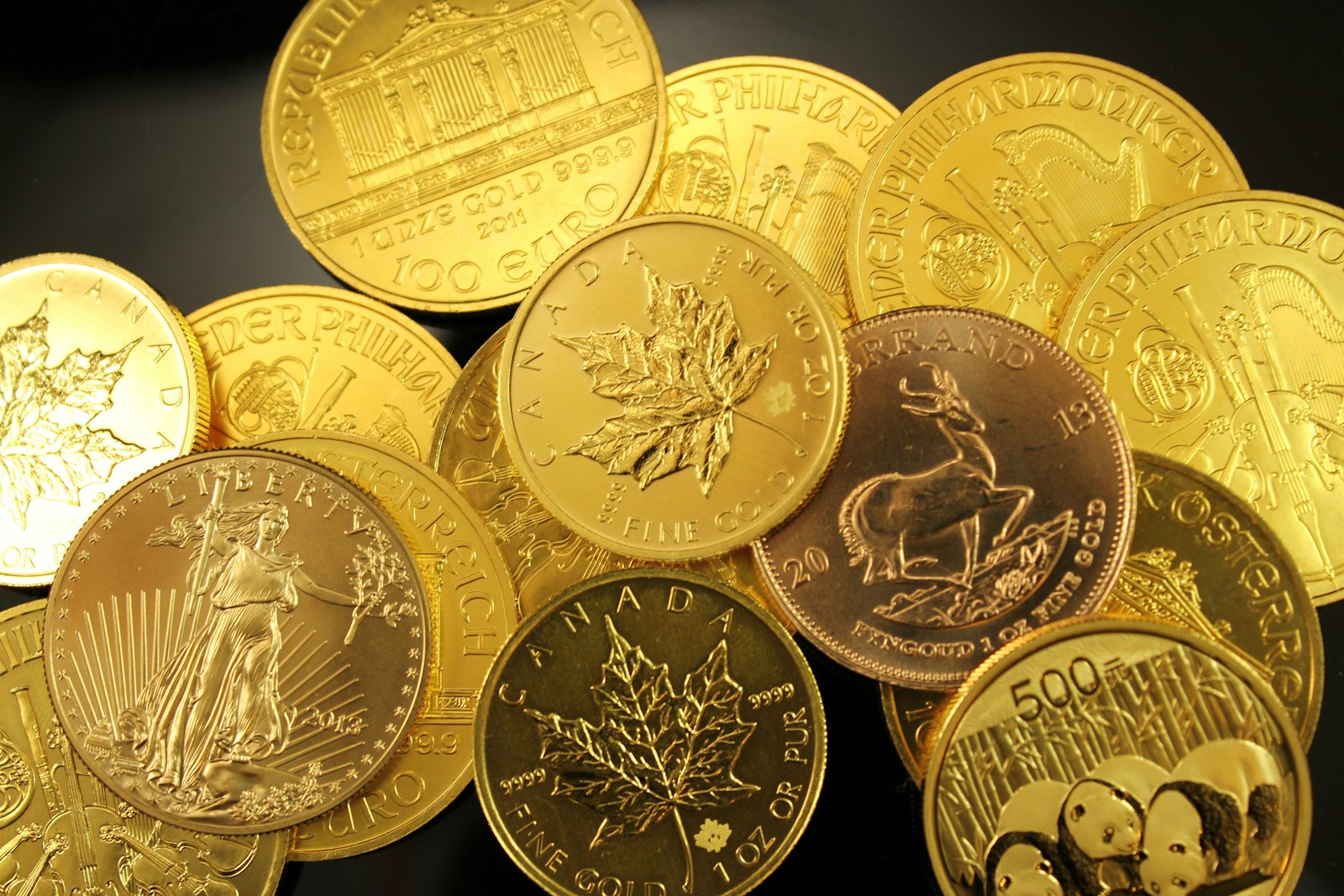
Short answer: start with a 1 oz American Gold Eagle or Canadian Maple Leaf. Both are made by governments, recognized by every dealer, easy to resell and allowed in a Gold IRA. If you want the lowest premium and don't need IRA eligibility, the Krugerrand is often cheapest.
The 5 best gold coins for beginners
| Coin | Made by | Purity | Typical premium (1 oz) | IRA eligible? |
|---|---|---|---|---|
| American Gold Eagle | U.S. Mint | 22k (91.67%) | 4–8% | Yes |
| Canadian Gold Maple Leaf | Royal Canadian Mint | 24k (99.99%) | 4–6% | Yes |
| American Gold Buffalo | U.S. Mint | 24k (99.99%) | 5–8% | Yes |
| South African Krugerrand | South African Mint | 22k (91.67%) | 3–5% | No |
| Austrian Gold Philharmonic | Austrian Mint | 24k (99.99%) | 4–7% | Yes |
Every coin above contains one full troy ounce of pure gold. The 22-karat coins (Eagle, Krugerrand) are slightly heavier because they include copper and silver, which makes them more scratch-resistant.
1. American Gold Eagle: best all-round pick
The most widely recognized gold coin in the U.S. Any dealer will buy it, and it comes in 1, 1/2, 1/4 and 1/10 oz sizes. It's allowed in a Gold IRA under a special exception despite being 22-karat.
2. Canadian Maple Leaf: best purity for the price
Nearly pure gold, usually a bit cheaper than the Eagle, with security features built into the design that make fakes harder. The soft 24-karat gold scratches more easily, so keep it in its capsule.
3. American Gold Buffalo: pure gold from the U.S. Mint
The U.S. Mint's 24-karat coin, with a classic design. It usually costs a little more than the Eagle.
4. South African Krugerrand: often the cheapest
The original modern gold coin, made since 1967 and very widely held. It frequently has the lowest premium of any major coin, but it isn't eligible for a Gold IRA.
5. Austrian Philharmonic: a strong alternative
Nearly pure gold from one of Europe's oldest mints, often priced close to the Maple Leaf.
Coins beginners should skip
- Proof and "limited edition" coins. Beautiful, but they can cost 15–35% or more over spot, and you rarely get that extra back when you sell.
- Graded and "rare" coins pitched by phone salespeople. Their value depends on collector demand, not gold.
- Tiny coins and bars (1/10 oz and smaller) if you can afford 1 oz. Small sizes carry much higher premiums per ounce.
- Unfamiliar private mints sold online at below-market prices. They're harder to resell and more often faked.
1 oz or fractional coins?
A 1 oz coin gives the most gold for your money. Fractional coins (1/10 or 1/4 oz) cost more per ounce but let you buy in smaller amounts and sell a little at a time. Many beginners start with one 1 oz coin, or a few 1/10 oz coins if their budget is smaller.
Frequently asked questions
What's the cheapest gold coin to buy? Usually the Krugerrand or Maple Leaf, but it changes. Compare current prices on our homepage.
Are 22-karat coins worth less? No. A 1 oz Eagle and a 1 oz Maple Leaf contain the same amount of gold. The Eagle just has some added metal for durability.
Where should a beginner buy gold coins? From an established dealer that publishes its prices. See where to buy gold online.
How do I know my coin is real? Weigh and measure it against the official specs. Our guide on how to tell if gold is real walks through it.
Compare gold coin prices → · Coins vs. bars → · Take the quiz →
Where to buy
Ready to buy? Compare these dealers
- JM BullionFree shipping over a minimum orderView prices
- APMEXOne of the largest selections onlineView prices
- SD BullionCompetes hard on low premiumsView prices
- Bullion ExchangesCoins, bars and rare coinsView prices
Compare the total price for the same coin, and pay from your bank account if you can; it’s usually cheaper than a credit card. We may earn a commission from these links; it never changes the order. How we make money.
This is general information, not financial advice. Check IRA eligibility with your custodian before buying for a retirement account.
Sources: MetalCharts premiums, Sept 2026 · APMEX: top 10 gold coins · Money Metals: best gold coins, 2026 · IRA Financial: IRS-approved metals
About this guide
Written by Mark Sandulli, founder of BestGoldPrice.com. Mark is not a financial advisor, tax professional, attorney or precious-metals dealer. This guide is general information based on public sources, not financial, tax or legal advice, and it may contain errors or be out of date. Precious metals can lose value. Confirm prices, fees and rules with the company and a licensed professional before you buy. We may earn a commission from some links. Read our full disclaimer.
Leave a Reply